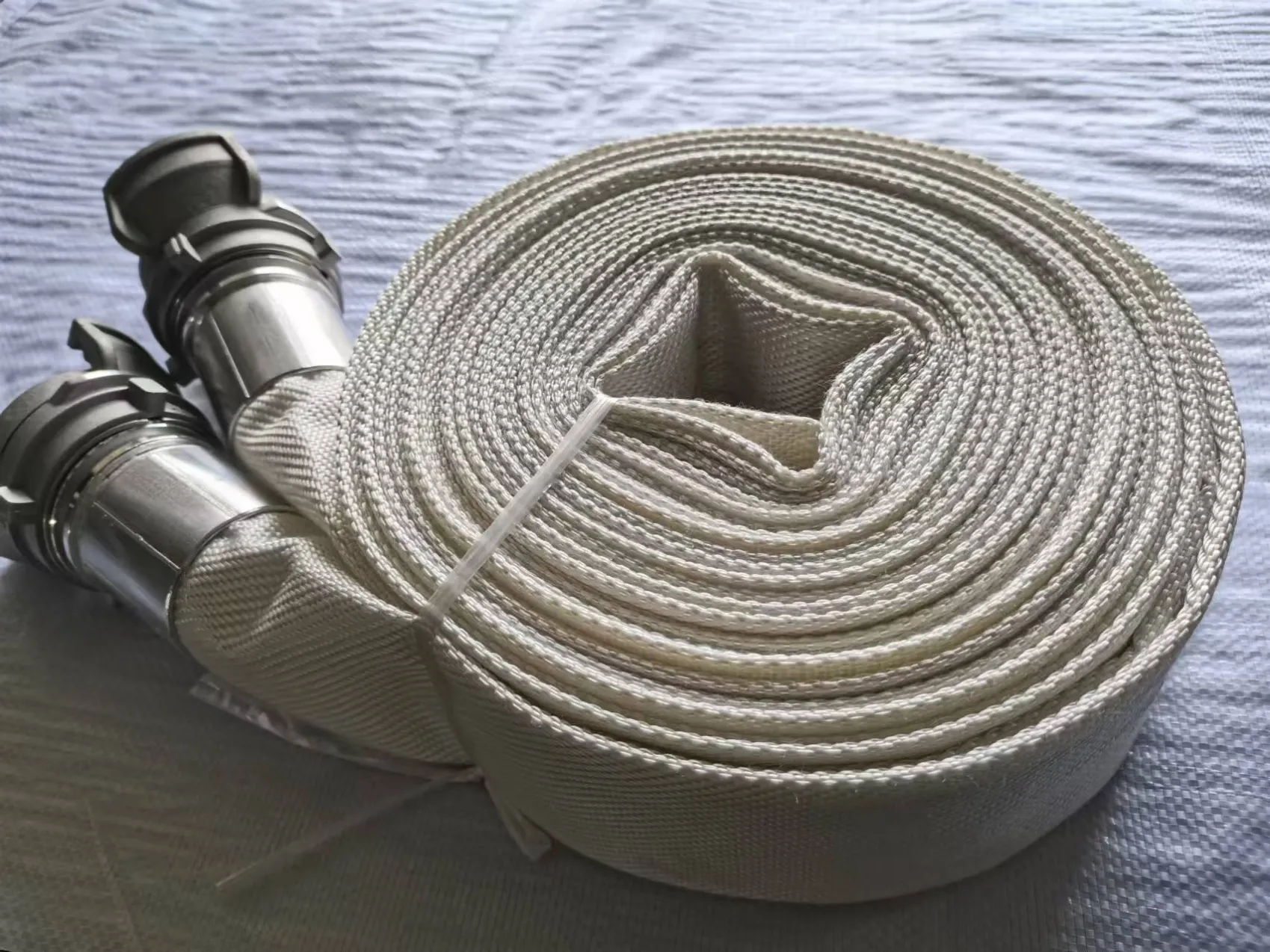
Layflat Hose Sourcing Guide | Agricultural Water Pipe Sizing
Learn how to match layflat hose inner diameter, flatfold width, and pump head pressure. View standard sizes from 1" to 8" for PVC and TPU agricultural layout pipes.
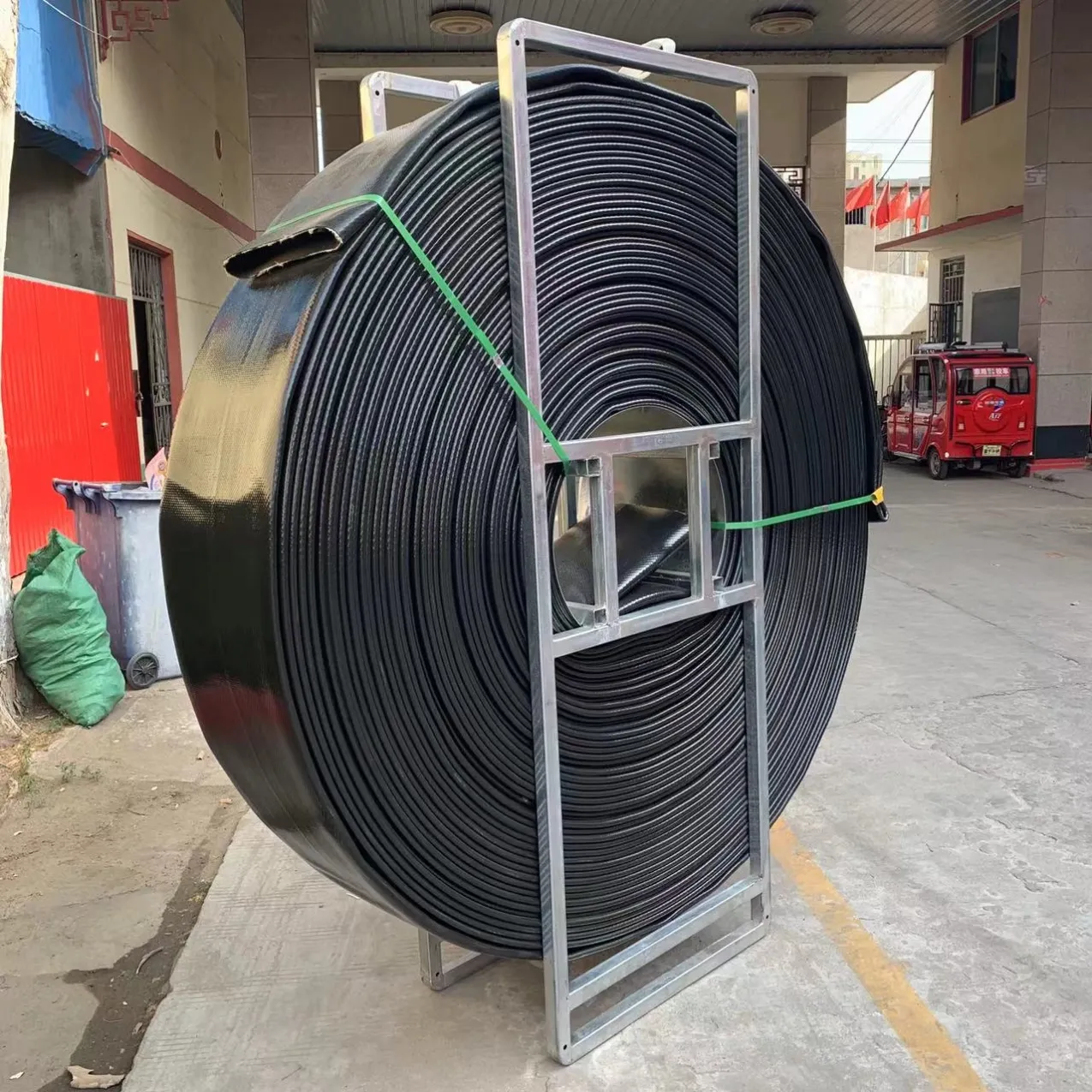
The Layflat Hose Sourcing Guide: How to Match I.D., Flat Width, and Pump Head
A Professional Technical Guide for Agricultural Distributors and Fluid Procurement Managers
For agricultural wholesalers, commercial farming distributors, and industrial procurement managers, sourcing the correct agricultural layflat hose is a balancing act between optimizing flow rate and preventing catastrophic field bursting. Selecting a pipeline isn't just about choosing a large diameter; it requires precision engineering alignment between nominal inner diameter (I.D.), flatfold width, and the hydraulic output parameters of your water pump equipment.
In global agricultural irrigation markets, 1.5-inch (40mm I.D.) and 2-inch (50mm I.D.) flat water hoses remain the dominant standard, striking a flawless ratio between fluid flow volume and portable handling weight. However, complex operations require a deeper systemic analysis of technical dimensions and structural compounds.
1. Decoding Water Hose Dimensions: Inner Diameter vs. Flat Width
One of the most frequent friction points during international procurement is the confusion between nominal inner diameter and压扁后的折宽 (Flat Width). Buyers often measure a flattened hose and mistakenly order the wrong size. As a premier fluid transmission trade expert, we utilize the rigid industrial calculation matrix to eliminate sizing errors.
The Engineering Conversion Rule:
To estimate the flatfold width of a flexible polymer hose based on its internal diameter, fluid engineers utilize the geometric ratio:
Flat Width ≈ (π × Inner Diameter) / 2 ≈ 1.57 × I.D.
International Standard Sizing & Sourcing Matrix
| Nominal Size (Inch) | Standard Inner Diameter (I.D. mm) | Theoretical Flat Width (mm) | Flow Characteristics & Best Application Environments |
|---|---|---|---|
| 1" | 25 mm | ≈ 40 mm | Low volume delivery; perfect for family nurseries, greenhouse misting, and small garden irrigation lines. |
| 1.5" | 40 mm | ≈ 63 mm | Excellent field flexibility; balances optimal hydraulic volume with lightweight roll roll capacity for manual deploy. |
| 2" | 50 mm | ≈ 78 mm | The Global Best Seller. The baseline backbone for large-scale agricultural flooding, farm drainage, and sprinkler connections. |
| 2.5" | 65 mm | ≈ 102 mm | Mid-tier fluid transport; typically matched with heavy-duty diesel water pumps for mobile dewatering. |
| 3" | 80 mm | ≈ 125 mm | High-capacity delivery; engineered for mountain orchards, long-distance water conveyance, and rural infrastructure. |
| 4" | 100 mm | ≈ 157 mm | Heavy-duty discharge; widely deployed across municipal flood response, construction drainage, and mine wastewater extraction. |
| 5" | 125 mm | ≈ 196 mm | Bulk chemical and fertilizer distribution; ideal for heavy industrial agricultural manifolds. |
| 6" | 150 mm | ≈ 235 mm | Municipal emergency dewatering, reservoir discharge, and broad-scale high-volume agricultural drainage networks. |
| 8" | 200 mm | ≈ 314 mm | Mega-volume extraction lines for coastal reclamation, heavy mining setups, and industrial emergency flood mitigation. |
2. The Engineering Rule: Matching Pump Head with Hose Pressure Ratings
Preventing a layflat water delivery hose from exploding in the field requires exact matching with your water pump head. A system failure occurs when a pump produces more pressure than the hose carcass reinforcement can support.
Converting Pressure Metrics for International Sourcing:
B2B buyers routinely evaluate pressure via diverse metrics depending on their regional engineering practices. Keep this baseline conversion factor integrated into your calculations:
1.0 MPa = 10 Bar = 145 PSI ≈ 100 Meters of Water Pump Head
The Golden Matching Equation:
To ensure a reliable field lifespan, the maximum continuous Working Pressure (W.P.) of your flat hose must remain superior to the total vertical lift or system resistance of your water pump:
Required Hose Working Pressure (Bar) ≥ Maximum Vertical Pump Head (Meters) / 10
The Water Hammer Factor:
In practical fluid mechanics, sudden pump activation or rapid valve closures cause an aggressive fluid shock wave known as the Water Hammer Effect (Surge Pressure). This moment spikes system stress far past ambient ratings. Industrial procurement guidelines mandate a 15% to 20% safety factor margin above the theoretical calculated system pressure when ordering layout lines.
3. Materials Matter: PVC vs. TPU Layflat Hoses for Agricultural Systems
The structural longevity and pressure handling of a flat hose depend heavily on its core material formulation and reinforcement framework architecture:
- Standard PVC Layflat Hose: Manufactured by premium PVC compound fused to a high-tensile polyester woven jacket bone structure. This offers a highly economical, lightweight solution for standard agriculture (typically running within a 2 Bar to 6 Bar pressure spectrum). It rolls tight for efficient container logistics.
- Heavy-Duty TPU/Polyurethane Layflat Hose: Engineered for brutal working environments. TPU provides unrivaled abrasion defense, oil resistance, and low-temperature flexibility. Capable of handling extreme working pressures (10 Bar to 20 Bar+), it is the premier choice for hydraulic fracturing, slurry drag lines, and high-pressure mining dewatering.
4. Wholesaler FAQ: How to Optimize Your Layflat Hose Sourcing
Q1: What standard roll length is optimal for commercial distribution?
A: The global industry benchmark is 20 meters or 50 meters per roll. These lengths provide the ultimate balance between field deploy layout capacity and manual packaging weight limits for logistics efficiency.
Q2: Why do some layflat water hoses crack or delaminate under bright sunlight?
A: Delamination occurs when a low-quality hose lacks proper UV stabilizers or utilizes poor extrusion-through-the-weave adhesion. Our premium lines integrate advanced anti-aging EPDM/PVC polymers or TPU jackets that withstand continuous intense ultraviolet weathering and ozone attack.
Q3: Can a standard flat discharge hose handle high vacuum suction applications?
A: No. Layflat hoses are strictly unreinforced against negative vacuum pressure and will collapse flat instantly. For suction workflows, you must source a hard-walled rubber hose embedded with a helix steel wire cage to prevent pipeline flattening.
Q4: Do your agricultural layflat lines support customized private labeling?
A: Yes. As an experienced trade manufacturing partner, we support industrial distributors with complete OEM brand stampings, custom sizing matrices, customized outer color options, and private length packing lines to match local agricultural market demands.
Partner with a Certified Fluid Expert
Managing standard fluid delivery requires a reliable wholesale supplier. We deliver factory-direct pricing, strict pressure test verification, and complete compliance certification across our entire portfolio of industrial flat rubber hoses.
Contact our technical sourcing desk today to secure a free sample roll and custom bulk price quote for your upcoming inventory run!