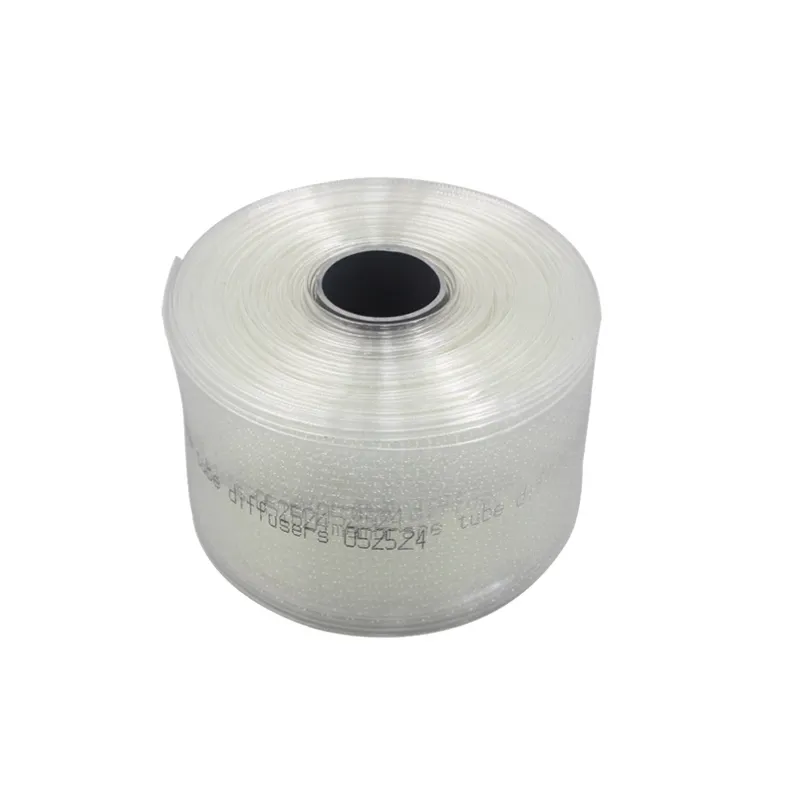


Aeration Tube
TPU Aeration Tube Air Diffuser Hose for Wastewater Treatment
A TPU aeration tube releases fine bubbles along its whole length to feed oxygen into wastewater. It runs in white-blue and white-red, and is cut to length for tanks, ponds and sewage treatment lines.
Specifications
- Product name
- Air diffuser tubing / aeration tube
- Material
- TPU (thermoplastic polyurethane) aeration membrane
- Type
- Soft hose, flexible tube
- Colour
- White and blue, white and red; custom colours on request
- Usage
- Wastewater treatment, aeration tanks, fish ponds
- Media
- Air, gas, oil, water
- Features
- Durable, flexible, non-toxic, eco-friendly
- MOQ
- 500 Meter
- Certification
- REACH, ROHS
What an aeration tube does
An aeration tube sits on the floor of a treatment tank and pushes air into the water as a stream of small bubbles. Oxygen moves from those bubbles into the water, which keeps the bacteria that break down waste alive. The tube itself is a soft TPU membrane; when the blower runs, the membrane opens its pores and lets air through. When the blower stops, the membrane closes again, which stops water and sludge from flowing back into the pipe.
Material and build
The membrane is TPU, a polyurethane that stays flexible in water and resists the acids and alkalis common in sewage. TPU holds its shape after repeated pressurising and relax cycles better than most rubber blends, which is why it is used for fine-bubble diffusers rather than general-purpose hose. The tube is supplied as a soft hose that lies flat on the tank floor or is clamped to a frame.
Where it gets installed
Municipal and industrial wastewater plants use these tubes in aeration basins. Aquaculture ponds use them to hold dissolved oxygen up overnight. Smaller sewage treatment units use short runs inside compact tanks. In each case the job is the same: move air into water without letting solids back into the air line when the blower stops.
Colour and length
Standard colours are white with blue and white with red. The two-tone build is not cosmetic: the darker layer marks the upper face, which helps installers lay the tube the right way up. Length is cut to the tank, and custom colours are possible on request. Tell us the tank dimensions and the blower output and we will size the run to match.
What to confirm before ordering
Four numbers decide the order: tank length and width, blower air flow, target dissolved oxygen level, and the depth of water over the tube. Air flow matters most. Too little and the membrane will not open evenly, so bubbles come out in a few spots instead of along the whole tube. Send those figures and we will quote the tube length and the layout.
Questions buyers ask
How long does a TPU aeration membrane last?
Service life depends on water chemistry and on how steady the air supply is. TPU membranes outlast rubber in most municipal effluent because they resist the acids and alkalis that harden rubber. A tube that runs dry or sees large pressure swings will fail sooner than one on a steady blower.
Can it handle oil in the water?
TPU tolerates intermittent oil contact better than many rubber compounds, but a heavy oil load will coat the membrane and cut air flow. Where oil is present, ask about the cleaning schedule rather than expecting the material alone to solve it.
What happens when the blower stops?
The membrane closes. That is the point of the design: the pores shut without air pressure behind them, so water and sludge do not drain back into the air pipe. It is the reason these tubes are used instead of open drilled pipe.