

PTFE Tube
AN6 Black Nylon Braided PTFE Fuel Line Kit, 10 ft
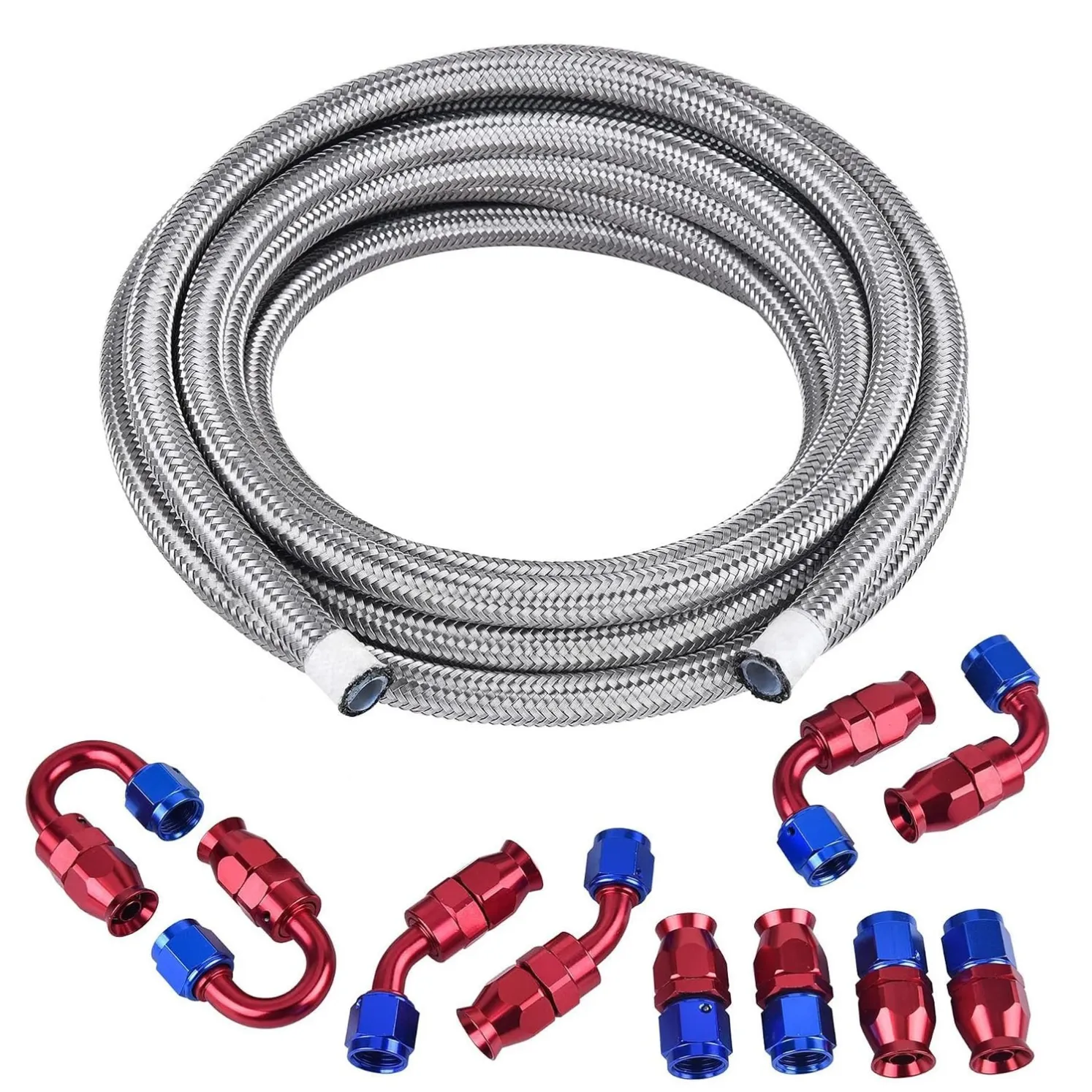
A 10 ft (3 m) AN6 (-6) PTFE fuel line kit: black nylon braided PTFE hose with four swivel hose ends. Built for E85, methanol and pump fuel on street and track cars.
Specifications
- Product name
- PTFE fuel line kit, AN6 (-6)
- Hose size
- AN6 (-6), 3/8 in (9.5 mm) inside diameter
- Hose length
- 10 ft (3 m)
- Tube
- PTFE smooth bore, conductive liner on request
- Braid
- Black nylon (AISI 304 stainless braid on request)
- Fittings included
- 2 x straight AN6 swivel, 2 x 90 degree AN6 swivel, anodised aluminium
- Thread
- 9/16-18 UNF, JIC 37 degree seat
- Working pressure
- 600 - 1,500 psi / 41 - 103 bar (by size)
- Temperature range
- -55 C to +210 C
- Fuel
- E85, methanol, petrol, diesel, race fuel
- MOQ
- 10 sets
- Packing
- Retail box or bulk, private label on request
What is in the box
The kit is 10 ft (3 m) of AN6 (-6) black nylon braided PTFE hose, two straight AN6 swivel hose ends, two 90 degree AN6 swivel ends, and the clamps to mount it. The ends are anodised aluminium with a JIC 37 degree seat on 9/16-18 UNF thread. Swivels, not fixed ends, so the nut turns without twisting the hose.
Ten feet covers engine bay work: pump to rail, filter to pump, or a short run from a firewall bulkhead. It is the length a shop keeps on the shelf because most jobs need one.
Where AN6 (-6) fits
-6 is the size most fuel systems land on. It feeds a normally aspirated V8, a mild turbo four, and most EFI swaps without a pressure drop worth chasing.
The number is the inside diameter in sixteenths of an inch, so it tells you the flow area and nothing about the thread. When a seller quotes a size that looks like a thread, check which one they mean before you compare.
Why PTFE and not rubber on E85
E85 is not a fixed blend. Summer fuel can run anywhere from 51 to 83 percent ethanol depending on the market, and winter blends sit lower so the engine starts. Rubber hose absorbs some of that, swells, softens, and starts weeping through the wall. That is where the fuel smell in the cabin comes from.
PTFE is inert to ethanol, methanol and the additives in pump fuel. It does not swell and it does not plasticise, and permeation through the wall is low enough that the smell goes away with the hose. It also holds minus 55 to plus 210 C, so heat soak near the rail is not the problem it is with rubber.
Fitting the ends
PTFE does not take a rubber hose end. The rubber end grips with a barb, and a barb has nothing to bite in PTFE, so the tube creeps out under pressure. These ends use an olive that compresses the tube against a machined nipple. Fit it once: a reused olive is the usual cause of a joint that weeps.
Tape the braid, cut with a fine tooth blade, and deburr the tube so the olive seats square. Keep the bend radius generous; a smooth bore PTFE line forced into a tight 90 kinks internally and no amount of re-clocking the fitting brings the flow back.
Nylon braid, and when to go stainless
Black nylon is lighter, bends tighter, and does not saw through paint or wiring the way stainless wire does. It is the braid most street builds want. Stainless is the one to specify near the exhaust manifold or the turbo, where radiant heat cooks nylon, and on any run that faces road debris.
Ordering options
Length, angle mix and braid are all open. Ask for straight, 45 or 90 degree ends in any combination, stainless braid instead of nylon, a conductive liner for cars on a plastic fuel cell, and your own label on the box. Minimum order is 10 sets and assemblies are pressure tested before they leave.
Questions buyers ask
Can I change the mix of angles?
Yes. Straight, 45 and 90 degree ends in any combination, and extra ends ship loose if a shop wants to keep spares.
Is the kit ready for E85?
The hose is. Check the seals and fittings in the rest of the system, because once the line is PTFE the hose stops being the weak part.